
ARC—D9
High-Sensitivity Thermal Hazard Analysis Detect early self-heating and characterize thermal stability under adiabatic conditions. It is designed for battery materials, small-capacity cells and reactive chemical samples

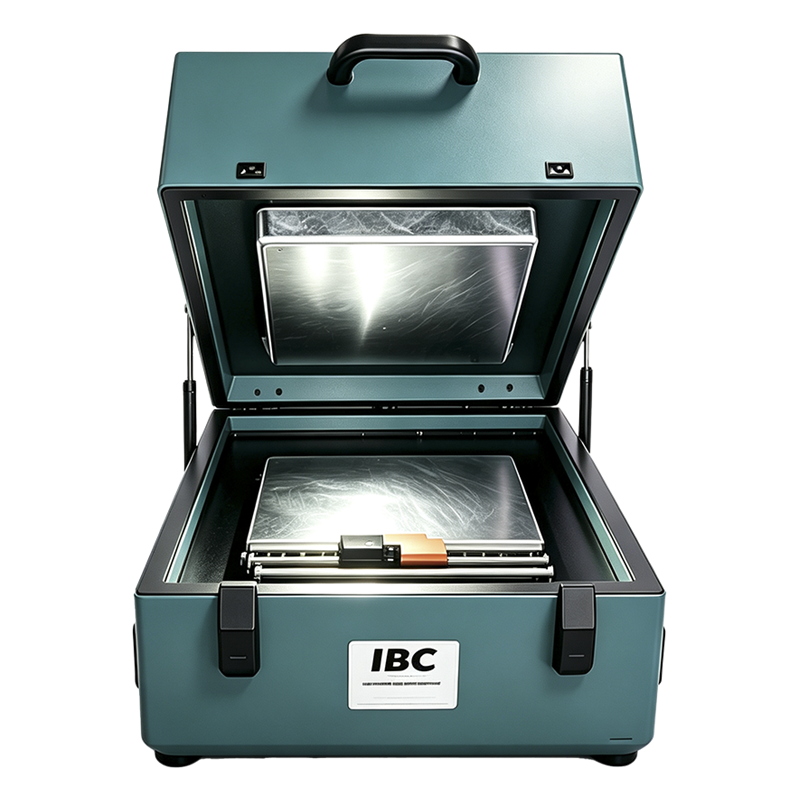
« Isothermal battery calorimeter IBC
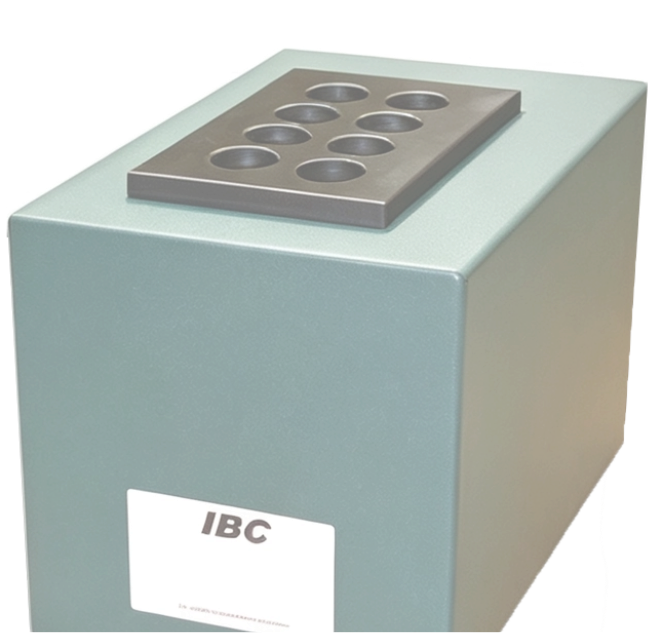
Heat generated during battery charge/discharge primarily originates from internal resistance. Characterizing this heat generation under various operating conditions is essential for efficient thermal management of battery packs and modules. The IBC can be used with an external circulator to study battery stability, performance, efficiency and service life, and also enables heat capacity measurement. The standard system accommodates pouch and prismatic cells, with adapters available for cylindrical cells.
Working principle >>
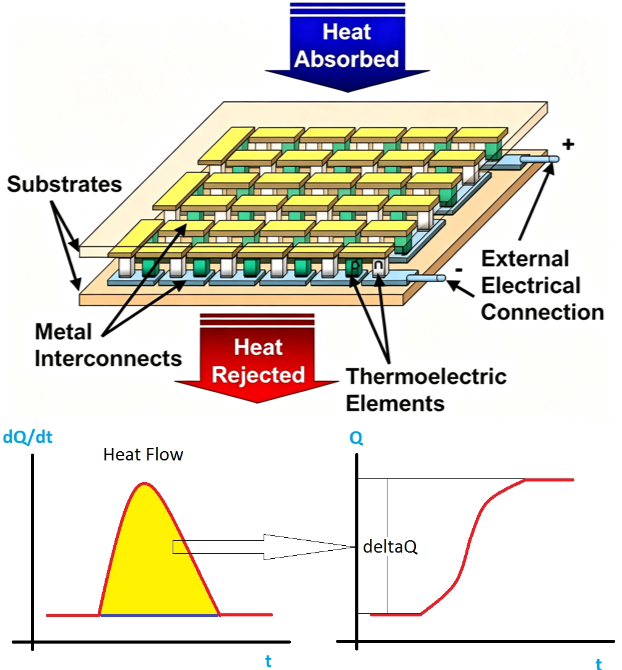
The IBC is a power-compensation calorimeter. It consists of isothermal sensor blocks that contact the battery and cover all or nearly all of its surface. Each block has two layers — a base layer and a measuring layer — kept at constant temperature by feedback control through an electric heater and thermocouple elements. The heater power of the measuring layer, which contacts the battery surface, is recorded; variations in this power reflect the heat generated or absorbed by the battery. The isothermal base layer ensures that the sensor blocks remain under constant heat-loss conditions.
Measurement characteristics

Battery
» Stability
» Efficiency
» Performance
» Service life
» Quantitative heat release situation

Exothermic change
» Chemical composition change
» Applying load, charging status
» Size and shape
» Environmental temperature
» Service life
Calorimeter Type
IBC Cylindrical
IBC-CC Coin Cell
IBC-PL Prismatic Large
IBC-Air Electronic components
Max Temperature (°C)
60
60
60
60
Min Temperature (°C)
-5
-5
-10
-30
Temperature Stability (°C)
0.01
0.01
0.05
0.05
Refrigerated recirculator required
No
No
Yes
Yes
Calorimeter chamber diameter
26 mm
25 mm
300 x 300 mm
450 x 400 mm
Calorimeter chamber depth
70 mm
5 mm
40 mm
300 mm
Number of sample chambers
1 sample 1 reference
1 sample 1 reference
1
1
RMS Noise (Ambient conditions)
200 µW
10 µW
200 µW
500 µW
Max heat detection
10 W
500 mW
100 W
100 W
Internal wiring (force)
8 ga (3.3 mm)
16 ga (1.3 mm)
N/A
N/A
Internal wiring (sense)
20 ga (0.8 mm)
20 ga (0.8 mm)
N/A
N/A
Heat capacity measurement capability
Yes
Yes
Yes
No
Heat cut out
Yes
Yes
Yes
Yes
N2 Purge
Yes
Yes
Yes
Yes
External cycler terminals
Yes
Yes
No
No
Footprint (Width x Height x Depth)
10 x 12 x 16 Inch
25 x 30 x 41 cm
10 x 12 x 16 Inch
25 x 30 x 41 cm
18 x 24 x 14 Inch
46 x 61 x 36 cm
30 x 26 x 24 Inch
76 x 66 x 61 cm
Weight
22 lbs
10 kg
22 lbs
10 kg
56 lbs
25 kg
48 lbs
22 kg
IBC >
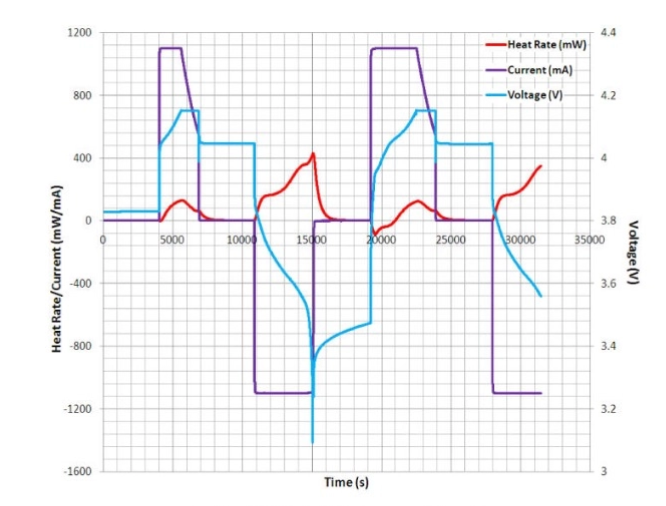
1.5 AH Lithium Battery Charge and Discharge Cycle 1A
IBC-CC >
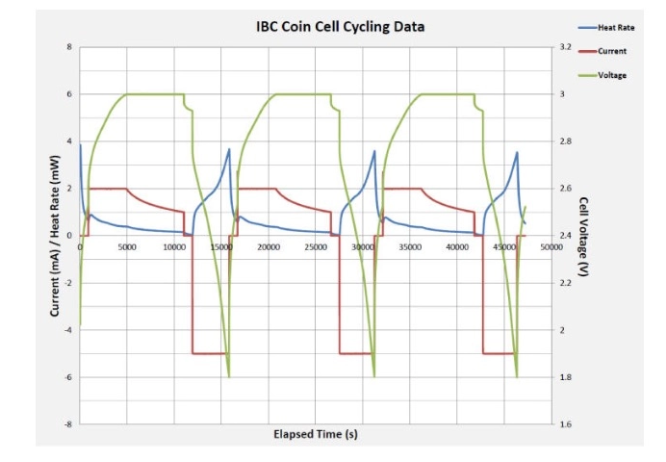
Cycling data from ML 2032,rechargeable coin cell, 65mAh capacity
IBC-PL-prismatic battery >
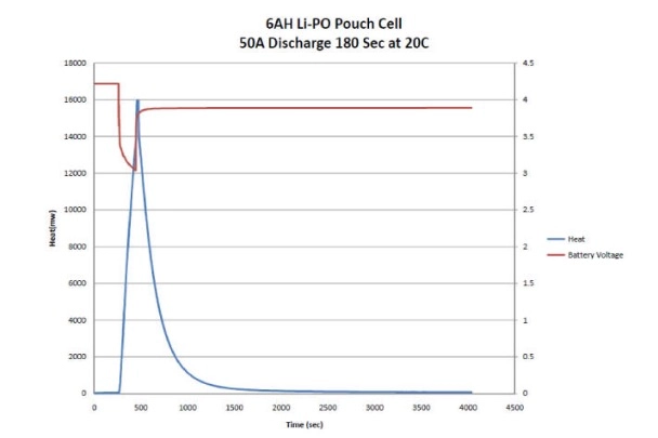
Heat generated along with current data during three minute discharges on a prismatic battery at 20°C.
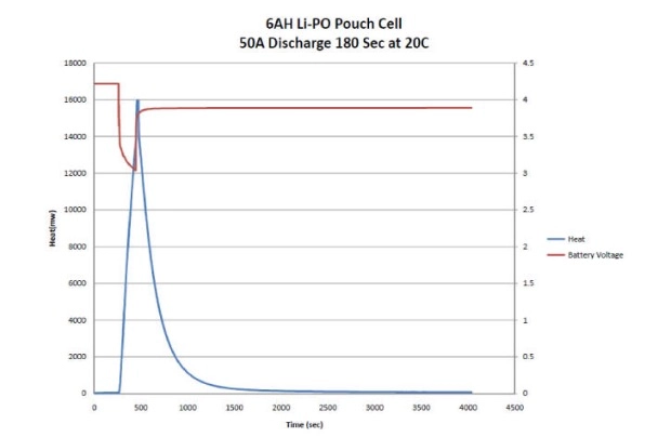
Heat generated along with voltage data during three minute discharges on a prismatic battery at 20°C.
IBC-AIR >
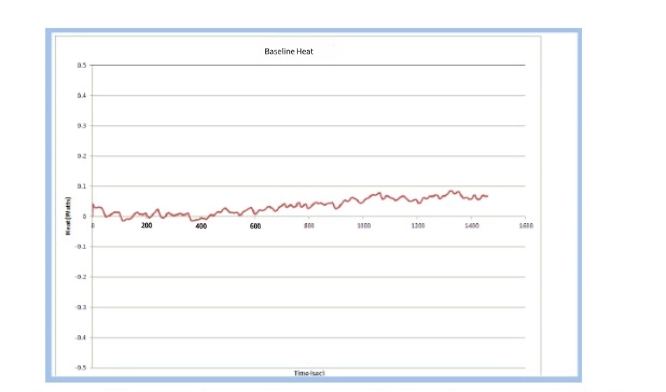
Baseline signal over 25min at 25°C.
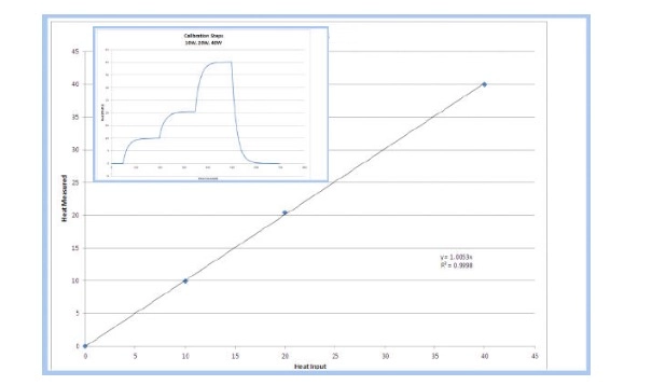
Calibration Steps of 10W, 20W, and 40W (insert) Calibration linearity (main plot)
· Windows®-based (7, 8, 10)
· Light-weight, low processor overhead (works on a basic laptop)
· Simple to connect (single USB connection), set up and run the test
· Produces ASCII format data for use in Excel/Origin
· Built in analysis function for heat capacity tests


High-Sensitivity Thermal Hazard Analysis Detect early self-heating and characterize thermal stability under adiabatic conditions. It is designed for battery materials, small-capacity cells and reactive chemical samples

Medium-sized insulated acceleration calorimeter The Right-Sized Solution for Real-World Thermal Behavior

High-capacity Isobaric Acceleration Calorimeter Power / Energy Storage Cell & Module Thermal Runaway Professional Testing Equipment

Ultra-large capacity insulated accelerated calorimeter Suitable for 20Ah - 800Ah large capacity energy storage cells, prismatic batteries, large-format square / pouch-type power batteries, cylindrical large cells, and multi-cell integrated modules.