An economical calorimeter for quickly screening the risks of exothermic reactions
The Rapid Screening Calorimeter (RSD) is a high-efficiency, low-cost safety calorimeter — rapidly assessing thermal and pressure hazards of chemicals and materials across a wide temperature range. With scanning mode and isothermal option, high-sensitivity sensors deliver simultaneous temperature, pressure, and reaction heat data acquisition.
Multifunctional
Multi-channel
Efficient
Easy to operate
Economica
Product features
|
01
Efficient multi-sample testing
It can test up to 4 samples (including 1 reference sample) simultaneously, and the single experiment time is only 30 minutes, significantly shortening the testing cycle of traditional calorimeters (such as ARC).
|
02
Wide Temperature Range & Flexible Modes
Temperature range from room temperature to 400 °C, scan rate 0–10 °C/min, pressure range 0–160 bar. Supports isothermal, scanning, and stepwise modes to adapt to diverse experimental requirement
|
03
High precision and flexibility
Compared with ARC, RSD is easier to operate, has lower experimental costs, is suitable for the preliminary screening of large-scale compounds, and reduces the cost of enterprise safety assessment.
|
04
Rich extended functions
Equipped with titration, stirring, low-temperature and other modules, it can simulate complex experimental conditions, improving data accuracy.
|
|
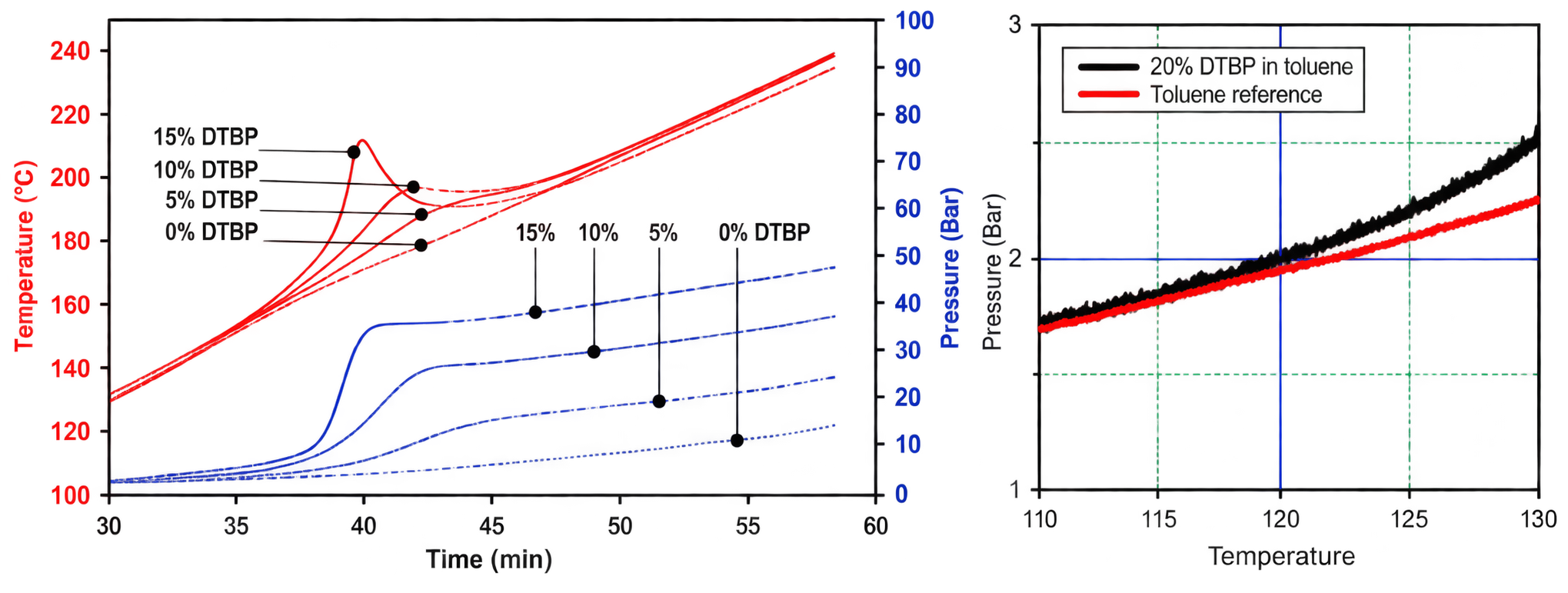
High-sensitivity DTBP test
Capable of detecting at the lowest level 1% DTBP
Micro-watt level sensitivity enables the analysis of trace samples, delivering reliable detection for dibutyl peroxide in toluene at concentrations as low as 1%.
|
1%
DTBP Detection Limit
MICRO-WATT SENSITIVITY · TRACE SAMPLE ANALYSIS
|
Characteristics
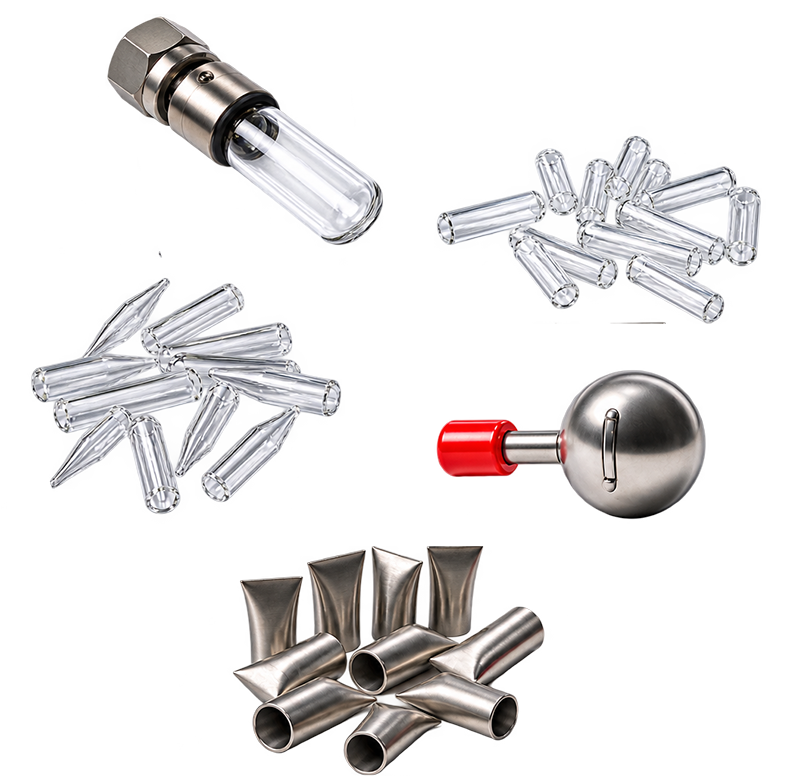
RSD High-Efficiency Multi-Channel Calorimeter — 4 samples tested in parallel with simultaneous temperature and pressure acquisition, a single run in only 30 minutes, sensitivity down to 1% DTBP in toluene, with reusable glass and metal sample chambers.
|
|
| Parameter |
RSD |
| Sample |
Liquid, Solid, Powder |
| Temperature Range (low-temp module required) |
-40 to 400°C (low-temp optional) |
| Operating Mode |
Isothermal; Stepwise heating; Linear programmed heating |
| Temperature Repeatability |
0.01°C |
| Scanning Rate |
0–10°C/min |
| Temperature Resolution |
0.01°C |
| Pressure Range |
0–160 bar (customizable range) |
| Number of Samples |
1–4 samples |
| Sample Quantity |
10 mg – 100 g |
| Optional Functions |
Low-temp module; Stirring; Sample addition; Atmosphere simulation; Gas collection; Online coupled mass spectrometry component analysis |
| Materials |
The materials include glass, titanium, stainless steel, and Hastelloy. |
| Shapes |
The shapes can be spherical, tubular, or cylindrical. |
| Volume & Sensor |
The volume can be selected, and the thermocouple can be attached to the surface or embedded inside. |
| Sensor Points |
The number can be a single point at the bottom or two points at the bottom and side. |
|
|