« In-situ Observation Instrument For Battery Thermal Runaway
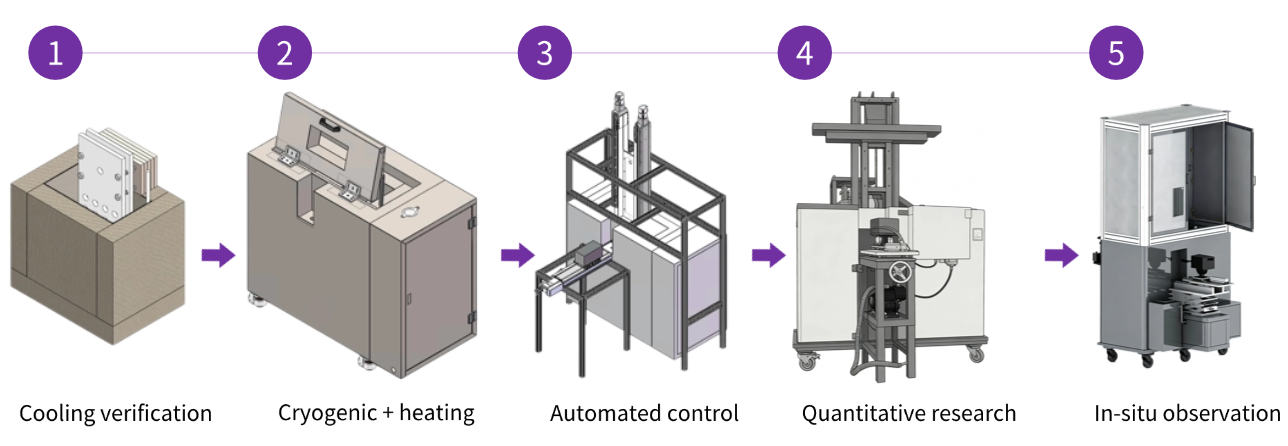
The TRF-10 precisely triggers thermal runaway, rapidly samples the propagation front, and uses liquid nitrogen immersion cooling for deep cryogenic capture — obtaining the state of the leading front during thermal runaway propagation and enabling in-situ observation of how thermal runaway spreads through lithium-ion batteries.
Experimental results >>
This experimental metric uses a zero thermal runaway front velocity as its criterion, serving to evaluate and guide the safety design of lithium-ion batteries.
01 Precisely trigger
02 Rapidly sample
03 Liquid nitrogen immersion cooling
04 PLC intelligent control
Investigating Various Thermal Runaway Mechanisms
Traditional thermal runaway test
01 Focus on the results after thermal runaway occurs
02 Macroscopic data such as temperature and time
03 It is difficult to obtain the intermediate state during the propagation
04 Analyze after the process is completed
|
VS
|
TRF-10 Research on the front line
01 Focus on the propagation process of thermal runaway
02 Thermal runaway front advancement status
03 Liquid nitrogen freezing to capture the key state
04 Obtain the front-zone sample for analysis
|
| Type |
Parameters |
| Maximum heating power |
6000W |
| Deep freezer dimensions |
119.8 × 59.8 × 101.0 cm³ |
| Heater dimensions |
21.4 × 10.6 × 11.8 cm³ |
| Host size |
37.7 × 36.5 × 11.1 cm³ |
| Liquid nitrogen system |
PLC control, real-time liquid level monitoring |
| Equipment composition |
Pneumatic sampling mechanism, liquid nitrogen refrigeration system, push rod-handwheel thermal runaway triggering mechanism, electromagnetic heating system |
| Cooling water pump |
Speed: 3000r/min
Bore diameter: 25mm
Head (of a pump or a water column): 40m Stroke length: 9m |
More comprehensive in-situ observation of lithium-ion battery thermal runaway
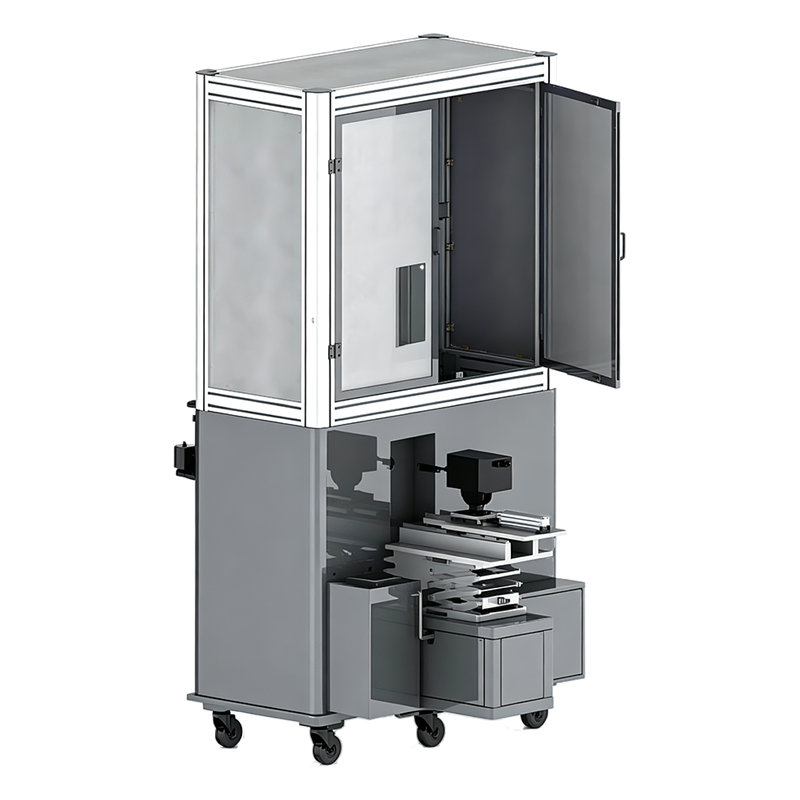
Key upgrades of the 5th-generation in-situ observation instrument for Li-ion battery thermal runaway:
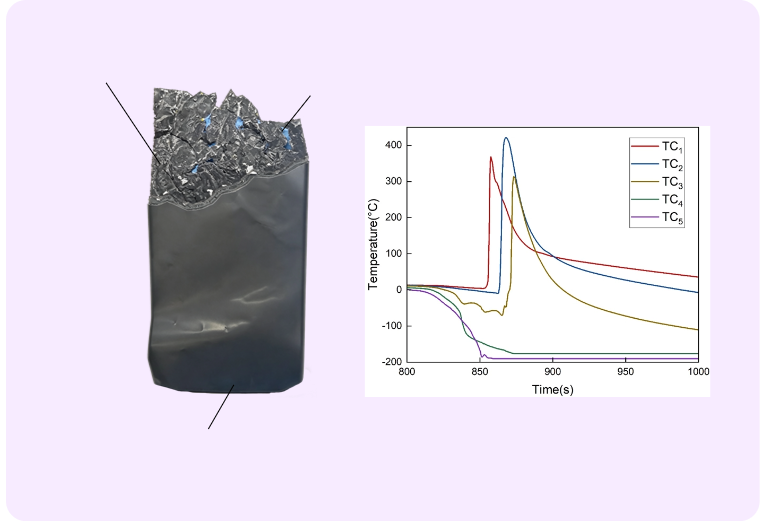
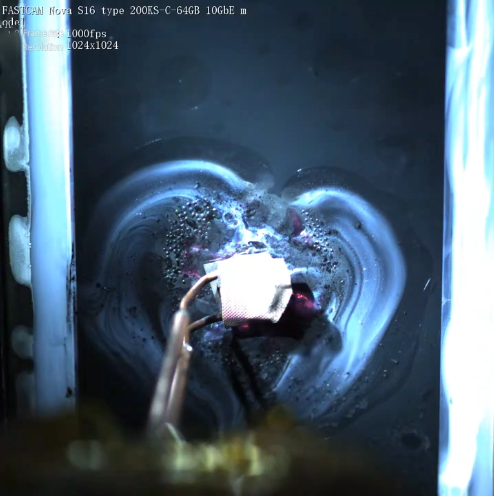
The instrument incorporates A newly added optical window for cell mounting, integrated with a high-speed camera module, to records the propagation process of the thermal runaway front, enabling in-situ observation of macroscopic physical phenomena;
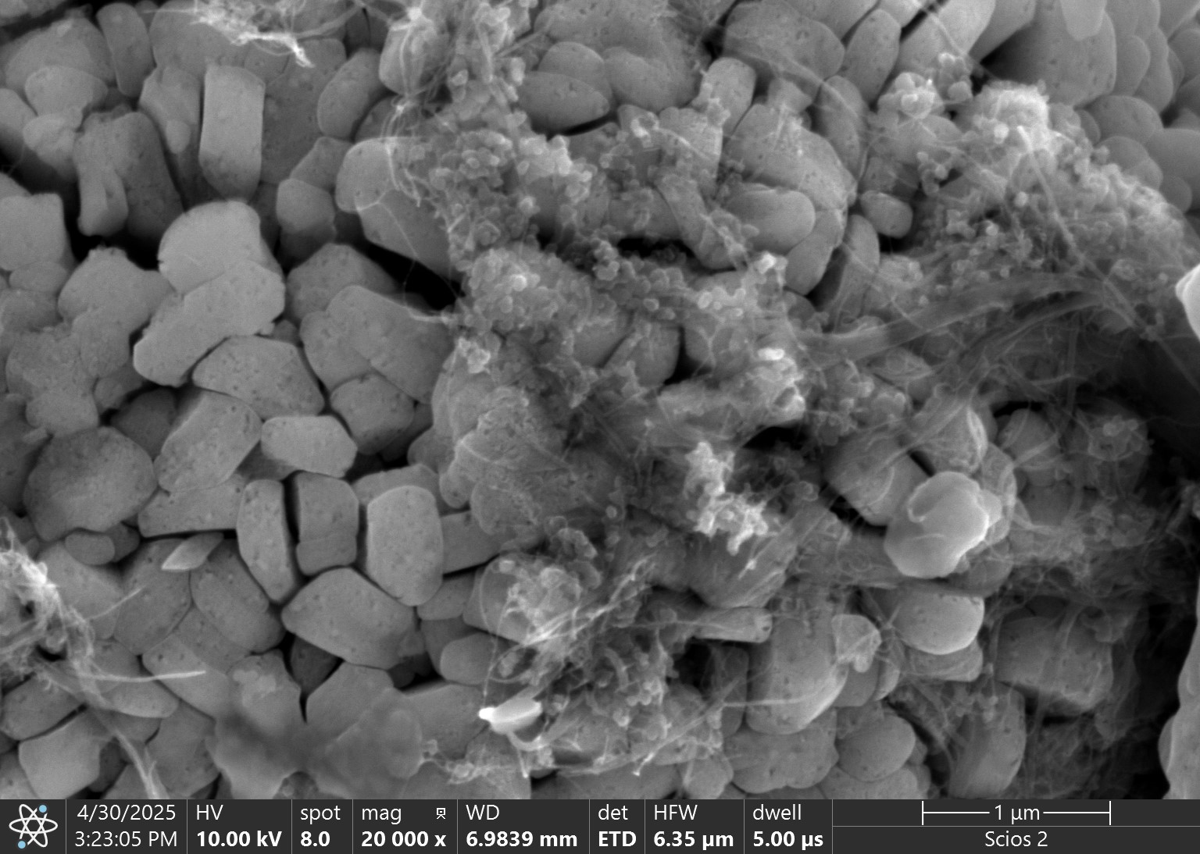
Coupled with scanning electron microscopy (SEM), the instrument directly characterizes and analyzes the thermal runaway front, enabling in-situ observation of microscopic material changes.
Macroscopic physical phenomena
microscopic material changes
The 5th generation iteration is solely aimed at achieving a more stable detection of the thermal runaway front surface.